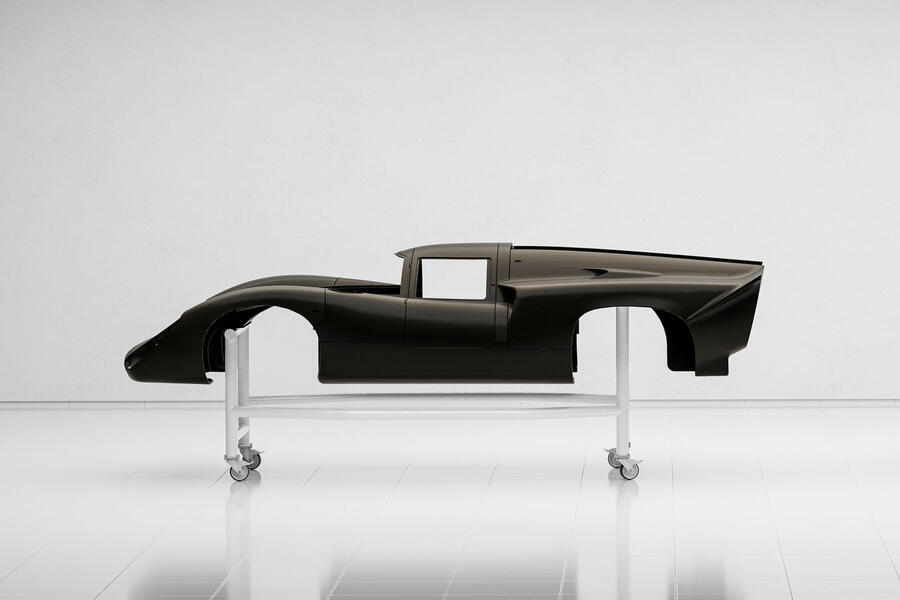



















Reborn British race car manufacturer Lola has revived its storied T70 as a 500bhp road-going supercar.
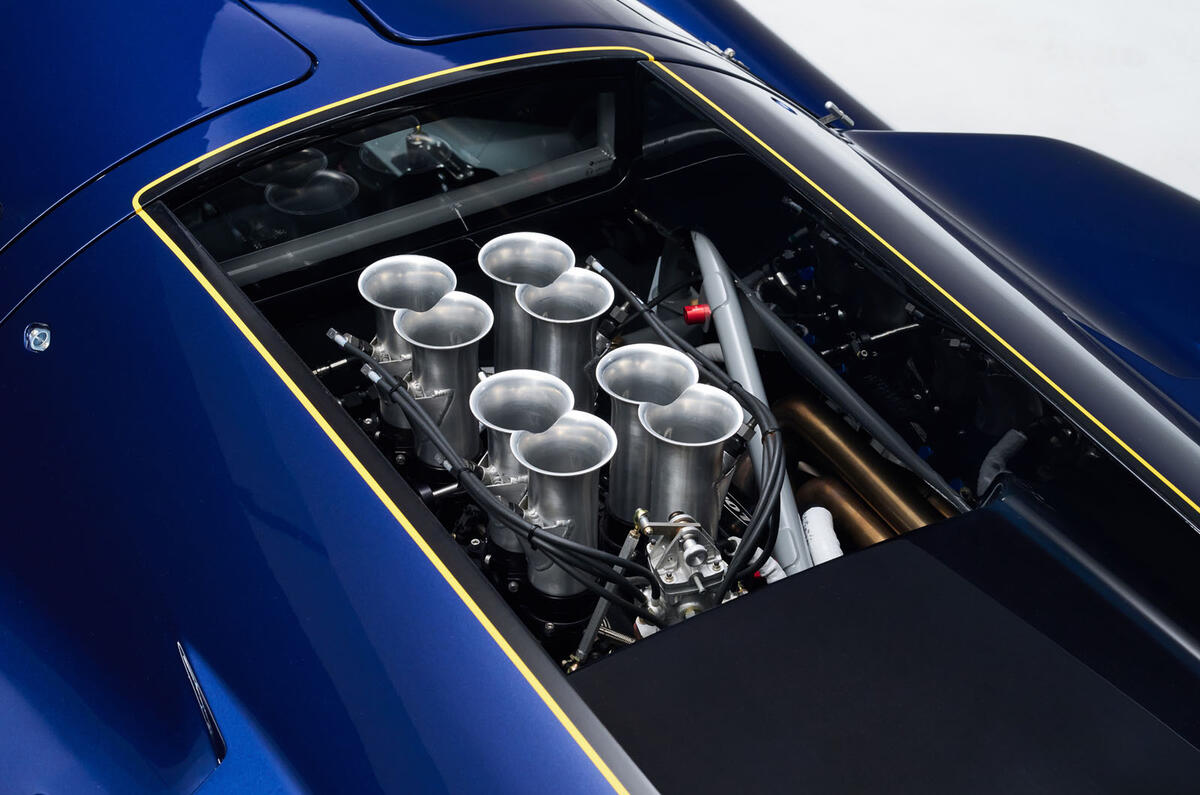
A reboot of the Mk3B T70, which scored a one-two in the 1969 Daytona 24 Hours, the T70S GT is powered by a naturally aspirated 6.2-litre Chevrolet V8, mated to a six-speed Hewland manual gearbox.
Yet “I didn’t want this just to be a continuation car; I feel like that’s overdone,” Lola chairman Till Bechtolsheimer told Autocar, fresh from racing a Ford Mustang GT3 in the Sebring 12 Hours.
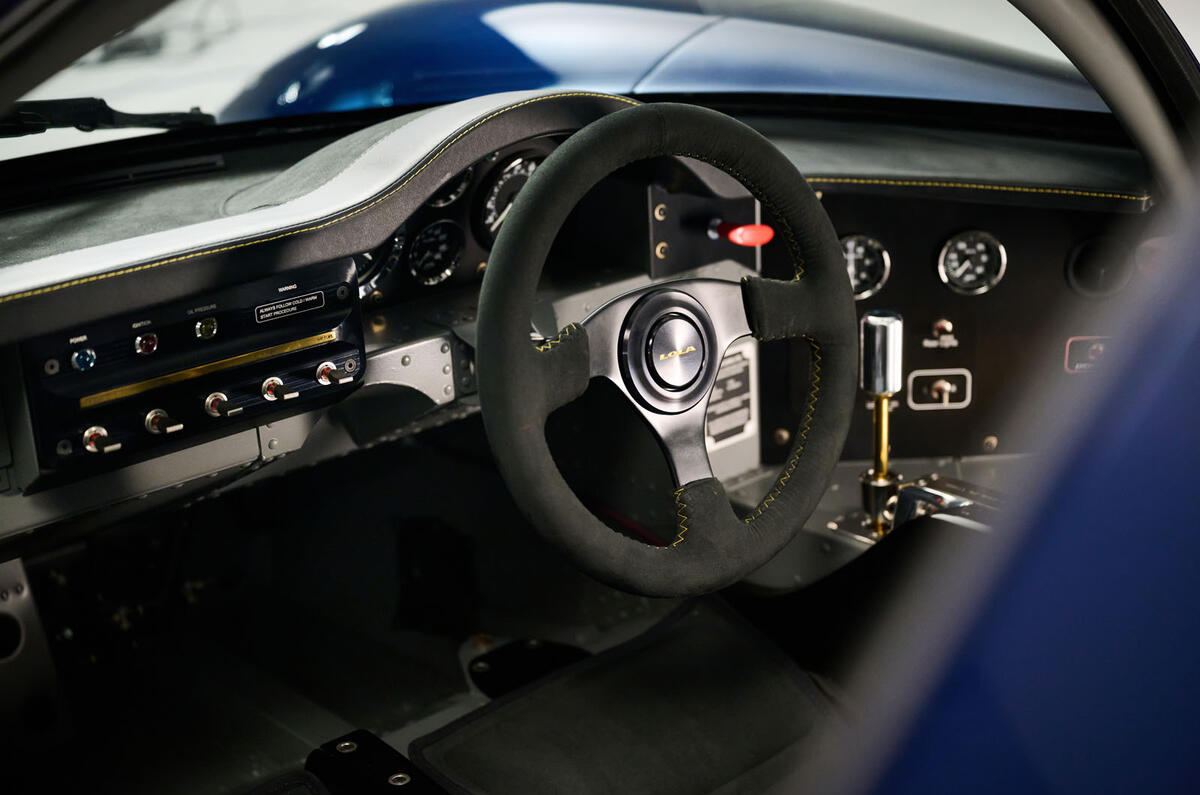
To that end, the T70S GT's gearbox can be switched into a sequential mode for track use, in a similar fashion to the combined automatic/manual ’box used in the Koenigsegg CC850.
Underpinning the swooping bodywork is an aluminium chassis, helping the T70S GT achieve a dry weight of just 890kg.
That gives the T70S GT a power-to-weight ratio of 562bhp per tonne, on a par with mainstream supercars like the Lamborghini Revuelto. This allows it to hit 62mph from rest in 2.9sec and 124mph just 6.4sec later.
Suspension comes in the form of double wishbones and height-adjustable coilovers at both the front and rear ends.

Meanwhile, the track-only T70S uses the 5.0-litre Chevrolet V8 and five-speed Hewland gearbox that the original car used in period.
It’s more powerful than the 6.2-litre road car, with 530bhp, and lighter too, at 860kg (dry), boosting its power-to-weight ratio to 616bhp per tonne. That cuts its 0-62mph time to 2.5sec and gives a top speed of 203mph.
"The track car is identical to the original," said Bechtolsheimer. "We've got FIA HTP [Historic Technical Passport] papers on the prototype; every one of those race versions of the car will get delivered with FIA papers and will be eligible for historic racing."
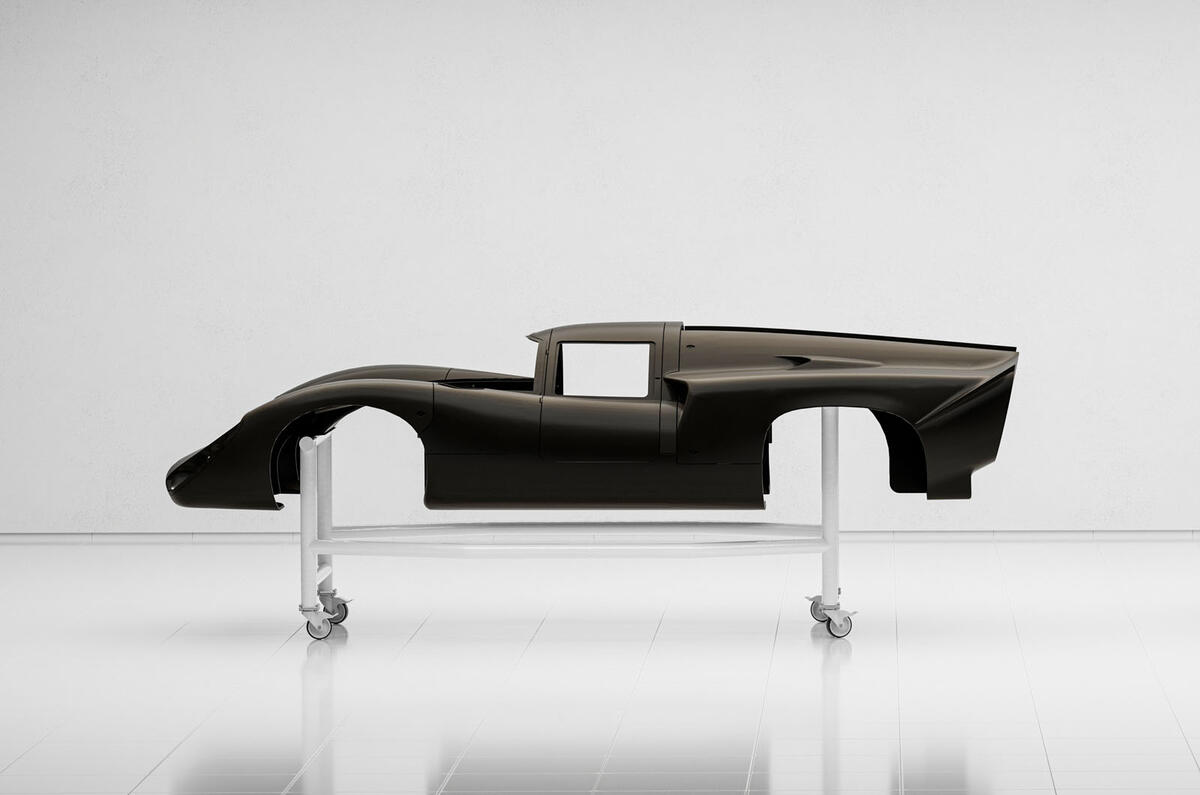
Each car's bodywork, meanwhile, is made from a new composite made from a combination of fibres from plant waste and basalt rock, bonded with resin from sugarcane, rather than the petrolchemical-based glue that's typically used.
Lola claims this new material, which it developed itself, is stronger than fibreglass and yields better refinement than carbonfibre.
"It's not going to impact the performance of the car but it's going to massively impact the sustainability of the of the build," said Bechtolsheimer.